Home / Persons / The Undertaker
The Undertaker

The Undertaker

🎬
Known For
Indian Cinema

Career Stats

Total Movies 0
Debut Year N/A
Awards Won N/A
Total Net Gross ₹0 Cr

🎬 Filmography & Box Office

Related News & Articles

Paul Heyman Says Roman Reigns Studied The Tribal Chief Character Until He Could 'Walk in the Skin' of It Wrestling
18 views

Paul Heyman Says Roman Reigns Studied The Tribal Chief Character Until He Could 'Walk in the Skin' of It

BY SACNILK

Roman Reigns’ transformation into The Tribal Chief changed the direction of his WWE career. After returning in 2020, Reigns aligned with Paul Heyman and moved away from the “Big Dog” persona that had defined much of his earlier run. He became a colder, more controlling figure who demanded understanding and established himself as the head of his family. Heyman has now explained that the character was not simply something Reigns performed during WWE television. The two worked on making Reigns understand The Tribal Chief so deeply that he could carry the character even when he was not cutting a promo or wrestling a match. While speaking on Six Feet Under with The Undertaker, Heyman recalled how he would deliberately speak to Reigns as The Tribal Chief during ordinary conversations, forcing him to think and respond as the character rather than simply memorizing lines. “When Roman and I first got put together, We would talk on the phone and at times I'd just out of the blue in the middle of a conversation talking about, you know, just how does your lawn look today? And just completely off topic, I'd say, what'd you have for breakfast today? Oh, you know, this many eggs and, you know, a bowl of oatmeal, whatever. Great, what did the tribal chief have? And I'd want him to talk to me as the tribal chief. And not just for a promo, like for five minutes. Talk to me for a while. Spend a half hour on the phone with me as the tribal chief. Do small talk with me as the tribal chief.” Heyman said the purpose was to make Reigns completely comfortable with the identity of the character. Instead of thinking about what Roman Reigns would say, he wanted Reigns to understand what The Tribal Chief would say and how he would behave in everyday situations. “Did the tribal chief take his kids to school today? Did the tribal chief pick his kids up from school today? What was that conversation like? So that just he learns how to... Walk in the skin of that character so much that he's just as comfortable being the tribal chief Roman Reigns as he is being Joe Anawai.” That approach became especially useful because The Tribal Chief was closely connected to Reigns’ real-life family background. Heyman explained that Reigns genuinely occupied a position of authority within the Anoaʻi family. “He is the head of his table. He is the tribal chief of that family. He legitimately is. And there always was. For a while, it was Afa and Sika together. Right. And Afa would handle the business, and Sika was the muscle. And then Rodney stepped up. Rodney, yeah. And for a while it was Junior. Junior was the undisputed head of that family for a long time. And it was time for Joe.” The partnership between Reigns and Heyman began in August 2020, shortly after Reigns returned from his hiatus. Heyman became his Special Counsel, later taking on the “Wise Man” identity, while Reigns built The Bloodline around his position as The Tribal Chief. The storyline eventually became one of WWE’s central stories for several years. Reigns’ battles with Jey Uso established the family dynamic, while The Usos, Solo Sikoa and other members of the Anoaʻi family were gradually brought into the story. Reigns’ championship run also became closely tied to the Bloodline narrative. Heyman believes the success came from treating every performer as an individual rather than trying to repeat what had worked with another wrestler. “What worked with Brock did not work with Roman. And what worked with Roman did not work with CM Punk. And what worked with CM Punk did not work with you or with Steve or with Rob Van Dam or anybody else that I've worked with. Everyone's an individual and we need to create and act like a marriage, like a professional marriage that I'm here to, if I understand my role right, I'm the supporting player.”

Paul Heyman Explains Why Roman Reigns Couldn’t Remain The 'Big Dog' Wrestling
76 views

Paul Heyman Explains Why Roman Reigns Couldn’t Remain The 'Big Dog'

BY SACNILK

Paul Heyman has revealed more about the decision that transformed Roman Reigns from “The Big Dog” into “The Tribal Chief,” explaining why he believed Reigns could not simply return to the same character he had played for years. The change came in 2020, when Reigns returned to WWE after stepping away during the COVID-19 pandemic. He aligned himself with Heyman and soon began presenting himself in a completely different way. The character eventually became known as The Tribal Chief and went on to define one of the longest chapters of Reigns’ WWE career. During his appearance on Six Feet Under, Heyman explained that the change was not simply about turning Reigns heel. He believed the entire presentation had to evolve. Heyman recalled that when WWE was preparing to put him together with Reigns, Vince McMahon originally told him that Reigns was still “The Big Dog” and that Heyman would be his advocate. “In 2020, when COVID hit and the decision was made corporately, we are going to produce live television or live-to-tape television twice a week, Raw and SmackDown. And we're still going to do what was then called pay-per-views, now premium live events. And Brock's contract wrapped up just as the whole world shut down. And Vince made the business decision, we got to take a break for a while.” Heyman then explained how Reigns’ situation created an opportunity for something new. With Reigns having taken time away and WWE looking for a new direction, the two finally had the chance to work together. “And the opportunity arose at that time that Roman had taken so much time off. And the decision was made for us to finally work together. And when I asked Vince his vision for it, he just said, ‘He's the big dog and you're his advocate.’” Reigns had already spent years being presented as The Big Dog. He had been positioned as one of WWE's leading stars, but Heyman felt that simply attaching himself to the same version of Reigns would not create anything fresh. “The first thing I said was, he can't be the big dog anymore. We've run with the big dog since 2012. He needs to evolve into something completely different, and I can't be his advocate. I was Brock Lesnar's advocate. I must be something different to this character.” Heyman did not want to take the role he had previously played alongside Brock Lesnar and simply place it beside Reigns. He believed both sides of the presentation needed to change. His inspiration came from another famous WWE character transformation: The Undertaker going from the Deadman to the American Badass. Heyman explained that the transformation worked because WWE did not erase everything that came before. Instead, the company took an established character and allowed him to evolve as the wrestling audience changed. “And the examples that I continuously gave were, and this is what sold Vince on it, was the Deadman, the American Badass. It has to be that shocking of a metamorphosis. And it has to make sense. The Deadman grew into the American Badass because times had changed around him. The '90s had evolved and the audience wanted more.” The goal was not to pretend that The Big Dog had never existed. Instead, the new character would build on Reigns’ previous history while taking him somewhere completely different. “Even though that's a seismic shift in character, you never alienated the Deadman, you incorporated him into an evolved character. It's the same thing. It's a progression, it's a metamorphosis. It's, here's what I have on my resume. And here's where I've been, and now here's where I'd like to take you next.” Heyman revealed that he came up with the nickname, although McMahon initially questioned the idea. Recent comments from Heyman have also confirmed that McMahon initially wanted Reigns to remain The Big Dog rather than adopt the new nickname.

Brock Lesnar Called The Undertaker After SummerSlam, Paul Heyman Reveals Why Wrestling
67 views

Brock Lesnar Called The Undertaker After SummerSlam, Paul Heyman Reveals Why

BY SACNILK

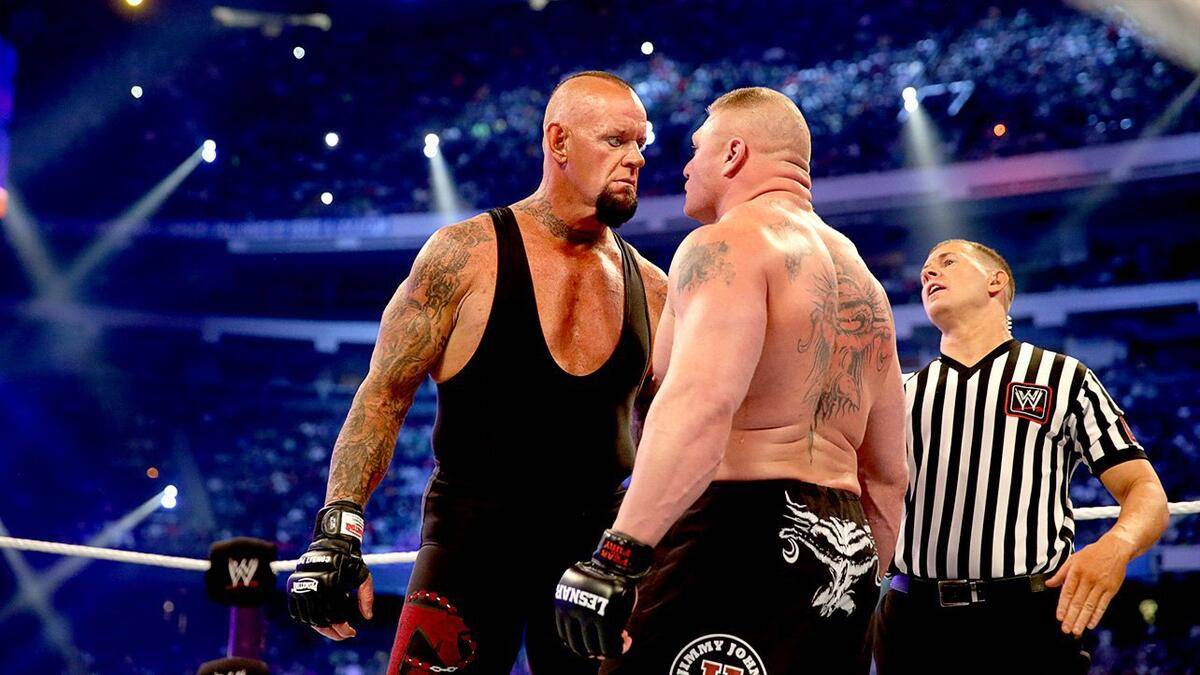
Paul Heyman has opened up about a private moment involving Brock Lesnar and The Undertaker following Lesnar’s latest WWE appearance, revealing why a phone call between the two meant so much to the legendary wrestler. Brock Lesnar’s latest WWE chapter came to an end at SummerSlam 2026, where he faced Oba Femi inside Hell in a Cell in what became his final match. After the bout, Lesnar raised Femi’s hand and called him the future, adding another memorable moment to the closing chapter of his WWE career. The loss came after Lesnar and Femi had already met twice, making their SummerSlam encounter the deciding match in their rivalry. Femi ultimately defeated Lesnar by pinfall inside Hell in a Cell, with the victory being presented as a passing-of-the-torch moment for the younger WWE star. During an appearance on Six Feet Under, Heyman joined The Undertaker and discussed Lesnar’s WWE journey, his relationship with the former WWE Champion, and what he believes makes Lesnar’s connection to the wrestling business different from how many fans perceive it. The conversation eventually turned to a phone call Lesnar made to The Undertaker shortly after SummerSlam. Heyman then explained why he felt the phone call was necessary. “There is a code of honor in this industry that if you are in there with someone that you can't even stand on a personal level, but you stand on the chair and you fall backwards, you know that person is going to catch you.” Heyman said that, in his view, the wrestling business has an unwritten code of trust between performers. Even when wrestlers may not have a close personal relationship, they still understand the responsibility that comes with sharing the ring and putting their safety in each other’s hands. “That phone call was a must,” Heyman said. “And I couldn't imagine the day going by without that phone call being placed.” The Undertaker appeared to agree with Heyman’s assessment, saying the gesture meant a great deal to him as an “old timer.” He also suggested that the moment showed another side of Lesnar that fans do not always get to see. The discussion came while Heyman and The Undertaker were reflecting on Lesnar’s career and his recent chapter in WWE. Heyman noted that Lesnar has often been portrayed as someone motivated primarily by money, contracts or his own schedule, but he believes that view overlooks Lesnar’s genuine respect for professional wrestling. Heyman pointed specifically to the phone call as evidence that Lesnar understands the traditions of the business. “I think he genuinely had to love this business,” The Undertaker said during the conversation, explaining how the call reinforced his view of Lesnar’s passion. Heyman also connected Lesnar’s relationship with current WWE star Oba Femi to the way he once worked with Lesnar himself. According to Heyman, Lesnar has now reached a point in his career where he understands the responsibility of passing knowledge and guidance to the next generation. The conversation also revisited Lesnar’s most famous WrestleMania accomplishment: ending The Undertaker’s undefeated WrestleMania streak at WrestleMania 30. Heyman argued that, regardless of everything else Lesnar achieved in wrestling and combat sports, that victory will always remain one of the defining moments of his career. He pointed out that Lesnar was an NCAA Division I heavyweight champion, became a WWE Champion, won the UFC Heavyweight Championship and competed in multiple WrestleMania main events. Yet, according to Heyman, none of those accomplishments compare with defeating The Undertaker at WrestleMania 30. “It’s the greatest claim to fame,” Heyman said. “And it always will be when it comes to Brock Lesnar.”

Trick Williams Reveals The Undertaker’s Chilling Warning Before Chokeslamming Him Wrestling
10.4K views

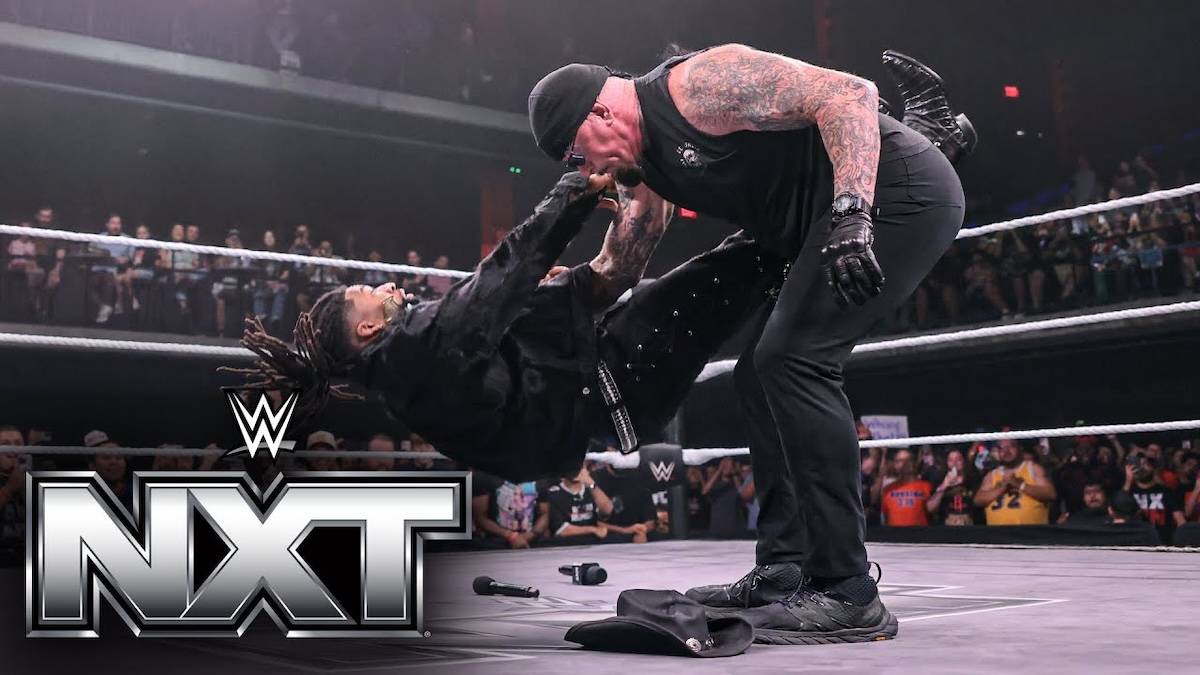
Trick Williams Reveals The Undertaker’s Chilling Warning Before Chokeslamming Him

BY SACNILK

The Undertaker has shared the ring with some of the biggest names in WWE history, but for Trick Williams, standing across from the legendary superstar carried a very different kind of weight. Williams has now revealed what The Undertaker told him immediately before delivering a chokeslam during their memorable confrontation. The moment came after Williams had taken a verbal shot at The Undertaker, seemingly unaware of just how quickly the situation could turn physical. The segment eventually ended with The Undertaker dropping Williams with a chokeslam, but the former United States Champion revealed that what happened immediately beforehand made the moment even more memorable. Speaking with Shak Wrestling, Williams explained that he had not spoken to The Undertaker beforehand about the comments he was going to make. He simply went out and delivered the line, hoping to see how the WWE legend would respond. “That's some of my most risky work because I mean, true backstory on that, I did not talk to him before, you know, saying this. So I just threw it out there just to see how he was going to respond,” Williams said. Williams recalled that The Undertaker responded by telling him, “Trick, I'm going to make you famous,” before following up with a chokeslam. The moment was particularly significant for Williams because The Undertaker had been someone he was genuinely afraid of while growing up. “He said, ‘Trick, I'm going to make you famous,’ and he gave me a chokeslam,” Williams recalled. Rather than viewing the incident as something embarrassing, Williams described it as an unforgettable experience. He explained that hearing The Undertaker's iconic entrance music and suddenly finding himself in the ring with one of his childhood heroes caused his nerves to spike. “I remember hearing that gong when his music drops. And my heart dropped all the way to my calves,” Williams said. “I was like, ‘Oh shoot, this is really happening.’ You know, this is your whole childhood.” Williams then revealed just how much The Undertaker's character had affected him when he was younger. He admitted that while playing wrestling video games as a child, The Undertaker was the one character he would avoid selecting because he was genuinely terrified of him. “True story, playing a video game as a little kid, he was the one character I would never select because I was terrified of The Undertaker,” Williams explained. “So to be there in the ring with him 20 years later or whatever the case is, 25, that's insane.” The encounter ultimately became more than just another WWE segment for Williams. It represented a full-circle moment in which a wrestler who once intimidated him as a child was now standing across the ring from him as a WWE veteran. Williams also revealed that despite taking the chokeslam, the interaction ended on a positive note. According to the former United States Champion, there were smiles afterward, leading him to believe that he had earned The Undertaker's respect. “I think I earned his respect that night,” Williams said.

10 WWE Superstars Who Were Never Truly Pushed — And Could Have Been Megastars Wrestling
11.6K views

10 WWE Superstars Who Were Never Truly Pushed — And Could Have Been Megastars

BY SACNILK

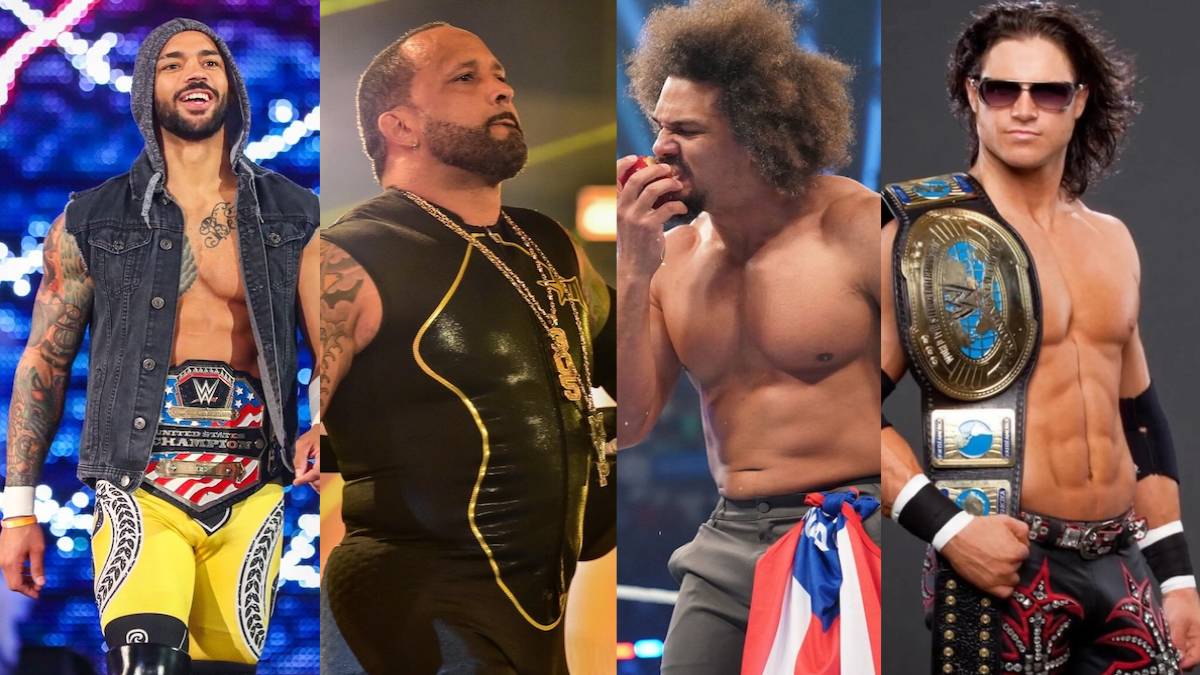
WWE has had no shortage of talented Superstars who had the charisma, athletic ability and in-ring skills to become major names, only for their careers to stall before reaching the main-event level. From Mr. Kennedy and Shelton Benjamin to Carlito and Paul London, these wrestlers showed flashes of genuine star potential but never received the sustained push needed to turn them into household names. This list looks back at 10 WWE Superstars whose careers had the ingredients for something much bigger. We will examine when they arrived in WWE, how they were introduced, the opportunities they received, the moments when they appeared destined for a major breakthrough, and why they ultimately failed to become consistent main-event stars. 10. D’Lo Brown D’Lo Brown entered WWE during the Attitude Era and initially became part of the Nation of Domination. He made his televised WWF debut in 1997 and quickly became one of the more recognizable members of the group. Brown eventually developed a character of his own, complete with his trademark head shake, chest protector and energetic wrestling style. He also became a two-time European Champion, with WWE’s own title history showing multiple reigns between 1998 and 1999. His athleticism was particularly impressive for his size, and he could work with both high-flyers and larger opponents. He was also involved in some of the most important factions and storylines of the Attitude Era. The problem was that WWE never consistently treated Brown as a potential top-level singles star. He remained an important supporting player rather than someone positioned alongside The Rock, Stone Cold Steve Austin, Triple H or The Undertaker. 9. Paul London Paul London was one of WWE's most naturally gifted high-flyers of the 2000s. He signed with WWE in 2003 and made his television debut on SmackDown against Brock Lesnar. London quickly established himself as an exciting performer in the Cruiserweight division before moving into the tag-team scene. He won the WWE Tag Team Championship with Billy Kidman in 2004 and later formed a highly successful partnership with Brian Kendrick. London and Kendrick defeated MNM at Judgment Day 2006 to win the WWE Tag Team Championship. Their reign eventually lasted 333 days, which WWE's title history records as the longest reign in the championship's history at that time. Despite that success, London was rarely presented as a potential singles main-eventer. WWE had an opportunity to turn him into a major high-flying babyface, but that opportunity never fully materialized. 8. Chris Masters Chris Masters arrived in WWE in early 2005 with almost everything WWE traditionally looked for in a potential star: an imposing physique, a memorable nickname, a simple character and a devastating finishing move. WWE's own profile notes that the 6-foot-4, 265-pound "Masterpiece" quickly attracted attention after debuting on Raw and became famous for his Master Lock Challenge. Masters even entered the Elimination Chamber for the WWE Championship during his first year with the company, demonstrating just how highly WWE initially viewed him. The Master Lock Challenge was one of the strongest concepts WWE had for a mid-2000s heel. Masters could walk into an arena, challenge anyone to escape his hold and immediately create a reason for fans to care. But the momentum didn't last. Instead of becoming a dominant monster heel who could eventually challenge for a world championship, Masters gradually became another name on the roster. 7. Shelton Benjamin Shelton Benjamin arrived in WWE as part of the highly respected duo with Charlie Haas. The pair won tag-team gold and quickly established themselves as one of the company's best young athletic teams. WWE's title history records their multiple World Tag Team Championship reigns beginning in 2003. Benjamin's singles career eventually produced some spectacular moments. His athletic ability was obvious, particularly in his famous matches against Shawn Michaels and other top stars. He also became a two-time Intercontinental Champion. The problem was that WWE often presented Benjamin as an excellent wrestler rather than as a potential superstar. 6. Carlito Carlito may have one of the strongest cases on this list because WWE initially appeared to have enormous confidence in him. He made his SmackDown debut in 2004 and immediately defeated John Cena for the United States Championship. He later won the Intercontinental Championship on his Raw debut against Shelton Benjamin. Carlito also had something many technically gifted wrestlers lacked: natural charisma. His "I spit in the face of people who don't want to be cool" character was simple, memorable and easy for fans to understand. He won multiple championships during his original WWE run, including the United States, Intercontinental and Tag Team Championships. He eventually left WWE in 2010 and returned to the company in 2023, although his later run was largely used in a supporting/comedic role. The frustrating part is that Carlito looked like someone who could have occupied the upper-middle card for years and potentially moved into the world-title picture. Instead, the company never made the long-term commitment necessary to turn him into a true main-event attraction. 5. John Morrison John Morrison had perhaps one of the most complete packages of any wrestler on this list. He originally entered WWE after winning Tough Enough in 2002 and eventually became Johnny Nitro. His partnership with Joey Mercury and Melina created the successful MNM act before Morrison developed into a singles performer. After becoming John Morrison, he captured the ECW Championship and later became a major part of WWE programming alongside The Miz. WWE itself documented the beginning of his "Morrison era" after he reinvented his character. His parkour-inspired movement, athletic entrances and spectacular offense made him one of WWE's most visually impressive wrestlers. Yet despite winning the Intercontinental and Tag Team Championships and becoming ECW Champion, Morrison never won WWE's top world championship during his original run. 4. MVP MVP arrived in WWE with a character that immediately stood out. He made his first SmackDown appearance on August 4, 2006, portraying the arrogant, flashy "Ballin'" superstar. WWE's own biography notes that the company gave him a major contract and positioned him as one of the brand's most intriguing new arrivals. MVP backed up the talk in the ring. Within less than a year, he became United States Champion, and he later won the WWE Tag Team Championship with Matt Hardy. WWE even presented him as someone with the potential to become a future World Champion. His feud and partnership with Matt Hardy were among the highlights of SmackDown during that period. MVP had charisma, a distinctive character, excellent mic skills and enough in-ring ability to work with top stars. Yet WWE never fully pulled the trigger on him as a world-title-level performer. Considering how over his character became, MVP is one of the clearest examples of a wrestler who appeared destined for a much bigger role but never quite received it. 3. Ricochet Ricochet built his reputation on the independent circuit and in New Japan Pro-Wrestling as one of the most innovative high-flyers in the world before signing with WWE and debuting on NXT in 2018, later moving to the main roster in 2019. His arrival came with genuine buzz — WWE even teased a mystery "One" storyline to build anticipation before his reveal. Once on the main roster, however, Ricochet was largely kept in the midcard, frequently used to elevate other performers rather than being elevated himself. His athleticism remained undeniable, but a sustained run at the top of a WWE card never came his way. 2. Zack Ryder Zack Ryder is one of the rare cases of a WWE Superstar who essentially pushed himself. After joining the main roster in the mid-2000s, Ryder found himself stuck in lower-card roles for years until he launched his own YouTube series, "Z! True Long Island Story," around 2011 — building a grassroots fanbase almost entirely outside of WWE's own programming. That fan-driven momentum eventually forced WWE's hand, leading to an Internet Championship run and a surprise Intercontinental Championship win at WrestleMania 32 in 2016. But each time Ryder gained traction, WWE pulled back shortly after, treating his pushes as brief experiments rather than long-term investments — leaving one of wrestling's most fan-beloved underdogs without the sustained spotlight his popularity suggested he'd earned. 1. Mr. Kennedy If there is one wrestler who arguably came closest to becoming a major WWE superstar before his momentum disappeared, it is Mr. Kennedy. Kennedy debuted in WWE in 2005 and quickly developed one of the most recognizable characters on the roster. His microphone work, entrance and "Kennedy... Kennedy!" catchphrase immediately separated him from the rest of the pack. WWE gave him major opportunities early in his career, including a Money in the Bank victory at WrestleMania 23. He was planning to hold the contract until WrestleMania 24 and challenge for the WWE Championship. That alone shows how seriously WWE was considering him. But his planned rise was derailed when he lost the Money in the Bank contract to Edge after defending it on Raw. WWE's own history notes that Kennedy remains the only Money in the Bank contract holder who never successfully cashed in. He also suffered injuries and experienced repeated changes in direction. Instead of becoming a consistent main-event heel, Kennedy's WWE run faded and he departed the company in 2009. For a wrestler with his character, microphone ability and natural presence, his WWE career ended far below the level many fans expected.

WWE Legend Says He Nearly Fought Vince McMahon After Brutal 'Man Up' Comment Wrestling
10.9K views

WWE Legend Says He Nearly Fought Vince McMahon After Brutal 'Man Up' Comment

BY SACNILK

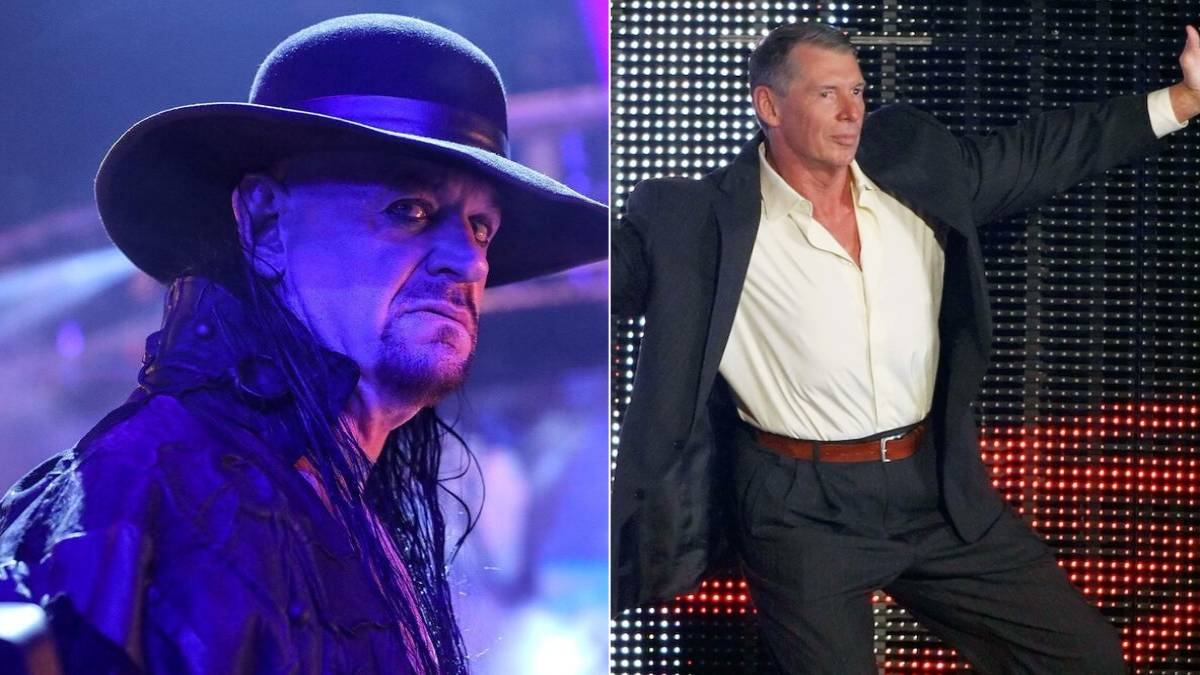
The Undertaker has revealed that he nearly got into a physical fight with Vince McMahon after the former WWE Chairman told him to “man up” during a difficult period in his personal life. Speaking on his Six Feet Under podcast, The Undertaker recalled visiting McMahon's office toward the end of his WWE career. He was only working a few times a year at the time and had been dealing with several issues outside of wrestling. The Undertaker said he went to McMahon simply to say hello and began opening up about what he was going through. However, McMahon responded with some blunt advice. “He looks at me, and it was as straight a face as it could be, he goes, ‘You know what, Mark? I really think you need to quit feeling sorry for yourself.’” The Undertaker said McMahon then added, “Yeah, you're feeling sorry for yourself. Man up.” The comment immediately angered The Undertaker, who felt he was speaking to McMahon as a friend rather than as his boss. “There was a sense of rage that come over me at that moment, like, man I thought me and you are friends,” The Undertaker recalled. The WWE Hall of Famer then warned McMahon that the conversation could have turned physical. “I did tell him, I was like, ‘You know, if you were anybody else, anybody else, we'd probably be fighting right now. No one talks to me like that. You don't talk to me like that.’” McMahon, however, refused to back down. “Well, damn it, somebody needs to,” McMahon replied. The Undertaker eventually walked away from the conversation, but after calming down, he realized McMahon had actually given him the reality check he needed. “It kind of dawns on me after I calmed down, like, you know what? Get your shit together, handle your business,” he said. The two eventually laughed about the incident, with The Undertaker later admitting to McMahon that he still wished he had fought him but agreed that McMahon had been right. Looking back, The Undertaker said McMahon knew when he needed tough love and when he needed support. “He knew when I needed a foot in the ass, or, you know, whether I needed a hug,” The Undertaker said. “He was always pretty much right on all of that stuff.”

WWE Legend Reveals Vince McMahon Once Admitted He Was Wrong About Major Punjabi Prison Match Spot Wrestling
11.2K views

WWE Legend Reveals Vince McMahon Once Admitted He Was Wrong About Major Punjabi Prison Match Spot

BY SACNILK

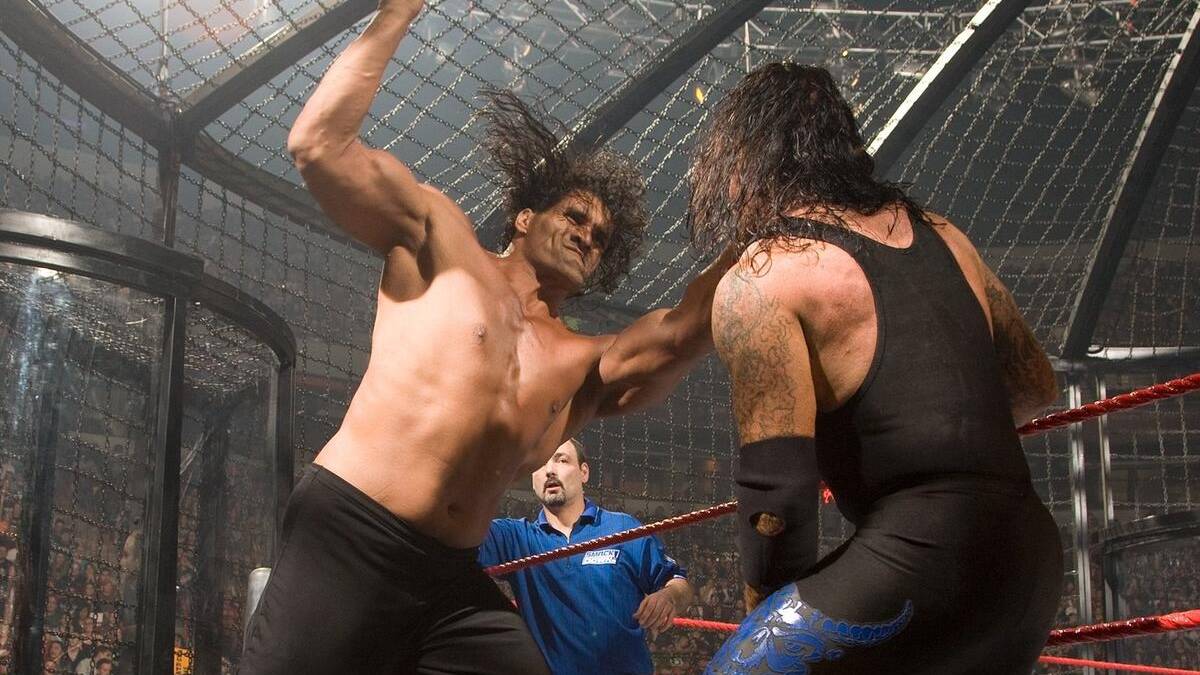
The Undertaker has revealed that Vince McMahon once admitted he was wrong about a major creative decision involving the first-ever Punjabi Prison Match. The Punjabi Prison Match made its WWE debut at The Great American Bash 2006, where The Undertaker was originally scheduled to face The Great Khali. However, Big Show replaced Khali in the match after an angle involving the two giants led to WWE changing the bout. Undertaker ultimately defeated Big Show after escaping the massive bamboo structure. Twenty years after the match, The Undertaker recalled the creative disagreement he had with McMahon while discussing the bout on his Six Feet Under podcast. According to the WWE Hall of Famer, McMahon had a specific idea for how Undertaker would escape the structure, while he believed there was a much better option. “It was originally supposed to be with Khali. Khali had something going on and they had to put Big Show in the match,” Undertaker explained. He then detailed the disagreement over the finish. “Vince had this idea about, he wanted us to go through the gate or something while we were fighting, and that's how I would get out of the cage,” Undertaker said. The Deadman had another idea in mind. Rather than escaping through one of the doors, he wanted to create a spectacular visual by jumping from the inner structure to the outer cage. “I had the idea that I wanted to jump from the inner cage to the outer cage and get out that way. I thought, man, that'll be such a cool visual. I said, ‘They won't expect it. It'll look amazing.’” However, McMahon ultimately rejected Undertaker's idea and insisted that the match be performed according to his original plan. Undertaker admitted that he eventually stopped arguing with McMahon, although he made his feelings about the decision very clear. “I don't want to hear anything else about it. This is the way we're gonna do it,” McMahon told him, according to Undertaker. “Fine. It's gonna suck, and when it sucks, it's gonna be on you,” Undertaker recalled telling McMahon. After the match took place, Undertaker felt the finish had failed to deliver the impact he had envisioned. He said the moment was essentially “whomp, whomp, whomp, whomp,” describing how flat he believed the spot had come across. But Undertaker didn't need to remind McMahon that he had disagreed with the decision. According to Undertaker, McMahon eventually acknowledged it himself. “I go back and I just looked at him. I didn't have to say a word,” Undertaker recalled. “He knew and he goes, almost under his breath, he goes, ‘Eh, yeah, I think you were right on that cage spot.’” Undertaker said McMahon immediately walked away after making the admission. For the WWE legend, the moment was particularly significant because of how rarely McMahon acknowledged being wrong. “But that was such a victory for me to actually have him admit that he was wrong on something. Didn't happen very often,” Undertaker said. The Undertaker also explained that the story was not an isolated example of creative disagreements between the two. Despite working together for roughly three decades, he said their visions for WWE's product and business were sometimes “polar opposites.” The Punjabi Prison Match itself became one of WWE's most unusual match concepts. The original structure featured two bamboo enclosures, with competitors required to escape both structures to win. The Undertaker ultimately became the first winner of the stipulation at The Great American Bash 2006. The match was later used twice more in WWE, with Batista facing The Great Khali in 2007 and Randy Orton facing Jinder Mahal in 2017. However, for Undertaker, the lasting memory of the original Punjabi Prison Match appears to be less about the unusual stipulation itself and more about the rare occasion when he finally heard Vince McMahon admit that his creative idea had been the better one.

Top 10 Moments:How Roman Reigns Became The Undisputed Face Of WWE Wrestling
11.1K views

Top 10 Moments:How Roman Reigns Became The Undisputed Face Of WWE

BY SACNILK

For over a decade, Joe Anoa'i — better known as Roman Reigns — has been at the center of WWE's biggest storylines, biggest matches, and biggest business decisions. Few performers in the company's history have carried the weight of the brand quite the way he has, headlining WrestleMania after WrestleMania while the product built itself around his character arc. What makes his story stand out isn't just longevity; it's the sheer range of it — a career that has moved through nearly every phase a wrestler can go through, from hated pretender to beloved hero to a villain the audience couldn't look away from. From a breakout member of The Shield to the "Tribal Chief" who headlined the industry's most dominant title reign in modern history, his journey is one of the most complete stories WWE has ever told. Here are the ten moments that built him into the company's cornerstone — the wins, the setbacks, and the reinventions that turned Roman Reigns into the undisputed face of WWE. 1. The Shield Storms In — Survivor Series 2012 Roman Reigns made his main-roster debut on November 18, 2012, ambushing the ring alongside Seth Rollins and Dean Ambrose to help CM Punk retain the WWE Championship. The Shield's arrival instantly reshaped WWE's landscape, and Reigns — the imposing enforcer of the trio — was immediately marked as a star in the making. 2. The Betrayal That Made Him a Singles Star — June 2014 On the June 2, 2014 episode of Raw, Seth Rollins turned on his Shield brothers, blasting Reigns with a steel chair and ending the faction. The split forced Reigns out of the group dynamic and into a singles push, setting him on the path WWE had been building toward: its next top guy. 3. Winning the Royal Rumble — January 2015 Reigns won the 2015 Royal Rumble Match, last eliminating Big Show, in a moment WWE clearly intended as a coronation. The reaction was famously divisive — fans openly rebelled against the push — but the match cemented WWE's commitment to making him the franchise's centerpiece, for better or worse. 4. Ending an Era — Defeating The Undertaker at WrestleMania 33 At WrestleMania 33 in 2017, Reigns beat The Undertaker in a No Holds Barred match, becoming only the second man ever to defeat the Deadman at WrestleMania. The Undertaker left his hat, coat, and gloves in the ring afterward — a symbolic passing of the torch that instantly raised Reigns' stature among the all-time greats. 5. The Torch-Passing Over John Cena — No Mercy 2017 In September 2017, Reigns defeated John Cena in a clean, hard-hitting match at No Mercy. Though it happened on a secondary pay-per-view, the bout is remembered as a definitive changing of the guard between WWE's dominant star of the 2000s–2010s and the man being groomed to replace him. 6. Finally Beating Brock Lesnar — SummerSlam 2018 After years of chasing him, Reigns defeated Brock Lesnar to win the Universal Championship at SummerSlam 2018. It was the validation moment fans had waited years for — proof that Reigns could beat the company's most dominant "conqueror" for the top title. 7. The Leukemia Announcement — October 2018 Weeks after winning the title, Reigns stunned the wrestling world on the October 22, 2018 Raw by revealing his leukemia had returned and relinquishing the Universal Championship to focus on his health. The raw, emotional moment humanized him overnight, transforming public perception and rallying the entire industry behind him. 8. The Reinvention — SummerSlam 2020 and the Birth of the Tribal Chief After stepping away for COVID-19 precautions and missing WrestleMania 36, Reigns returned at SummerSlam 2020 with a shocking heel turn, aligning with Paul Heyman and attacking Bray Wyatt and Braun Strowman. This rebirth as "The Tribal Chief" — colder, more calculated, and unapologetically dominant — is widely regarded as the true beginning of his prime and the character work that finally won over the audience. 9. Breaking Brock Lesnar's Record — January 2022 On January 16, 2022, Reigns surpassed Brock Lesnar's 503-day reign to become the longest-reigning Universal Champion in WWE history. It was statistical proof of just how thoroughly he had taken over the company at the top of the card. 10. Unifying the Titles — WrestleMania 38 At WrestleMania 38 in 2022, Reigns defeated Brock Lesnar to also capture the WWE Championship, unifying it with his Universal Championship to become the first-ever Undisputed WWE Universal Champion. It was the culmination of nearly two years of storytelling and confirmed him, definitively, as the face of the entire promotion.

John Cena's 10 Greatest 'What If' Matches: The Dream Opponents Time Never Let Him Face Wrestling
12.1K views

John Cena's 10 Greatest 'What If' Matches: The Dream Opponents Time Never Let Him Face

BY SACNILK

John Cena walked away from WWE in December 2025 with 17 world championships, a Grand Slam, and a resume that reads like a history book of the last two decades of professional wrestling. He beat The Rock, ended feuds with Lesnar, Undertaker, HHH, Angle, Edge, Orton, Batista, Punk, Styles, Owens, Rollins, Reigns, and dozens more across a 23-year run that closed with a tap-out loss to Gunther at Saturday Night's Main Event. But even a career that sprawling has holes in it. Some opponents were in a different company. Some were on the same roster for years and just never got booked against him. Some were on the wrong side of history — retired, injured, or simply timed out before creative connected the dots. Here's my ranking of the 10 dream opponents who never got their moment with Cena, and why each would've been must-see wrestling. 1. John Cena vs. "Stone Cold" Steve Austin This is the granddaddy of every "what if" list in WWE history. Austin and Cena represent two of the biggest merchandise-movers and most bankable stars the company has ever produced, from two entirely different eras of storytelling — Austin's beer-swilling rebellion versus Cena's hustle-loyalty-respect superhero routine. The two never actually locked up, though Austin did serve as a special guest referee for a string of Cena's SmackDown title defenses back in 2005, overseeing wins over JBL and Kurt Angle. When Cena was asked directly why it never happened, his answer was refreshingly simple: nobody ever pulled the trigger on it. He's said he would have loved to wrestle Austin, along with Andre the Giant, but chose to focus on gratitude for the matches he did get rather than the ones that slipped away. Given Austin's limited, sporadic in-ring appearances since the mid-2000s, this is a match that was always more likely to live in highlight-reel fantasy than reality — but it's still the one fans debate loudest. 2. John Cena vs. Goldberg Cena and Goldberg crossed paths exactly once in a competitive setting — the 2004 Royal Rumble, where both men entered late and were eliminated within minutes of each other, Goldberg going out 24th and Cena 25th. Beyond that, despite Goldberg's surprise 2016 return giving him fresh programs against Brock Lesnar, Roman Reigns, The Undertaker, and Kevin Owens, a singles match with Cena simply never materialized. Both men have publicly wished it had. Goldberg has said he never got the chance to put his hands around Cena's throat and admitted that would have been fun, while Cena, asked about it directly at a fan convention, shrugged it off with a joke about nobody ever telling him to do it. With both stars running retirement tours in the same calendar year, some in the wrestling media even pushed publicly for WWE to finally book the collision before either man hung up his boots — but the moment never came. 3. John Cena vs. Ric Flair The Nature Boy shared the ring with essentially every major star of the last five decades — Hogan, Steamboat, Sting, Michaels, Triple H, Batista — spanning the WCW, NWA, and WWE eras. Somehow, a Flair-Cena singles match never happened, despite years of overlap on WWE programming during Cena's ascension in the mid-2000s. The stylistic contrast alone makes this one of the more tantalizing misses: Flair's chop-heavy, psychology-driven old-school formula against Cena's power-babyface, five-moves-of-doom arsenal. A Figure-Four attempt countered into an Attitude Adjustment would have been the kind of moment that bridges wrestling generations. 4. John Cena vs. Kazuchika Okada Often billed by fans and pundits as New Japan Pro-Wrestling's answer to Cena — a franchise cornerstone who carried his promotion on his back for over a decade — Okada's career arc ran almost parallel to Cena's later years. The two were never on the same roster at the same time, and any lingering hope of a crossover dream match effectively ended when Okada signed with AEW rather than WWE. It remains one of the biggest "closest we'll ever get is a highlight reel" matchups in the sport, a genuine East-meets-West spectacle that wrestling fans on both sides of the Pacific wanted. 5. John Cena vs. Drew McIntyre This is arguably the most glaring miss on the list, simply because of how much runway existed for it. McIntyre had two separate stints on WWE's main roster overlapping with Cena's career, including his rise to two-time world champion status in the 2020s, and the two never once collided in a marquee singles match. McIntyre was even floated by wrestling media as a logical dance partner for Cena during his 2025 farewell tour, given the timing of McIntyre's redemption arc as a future Hall of Famer, but the creative never lined up before Cena's final bell rang. 6. John Cena vs. Kenny Omega The AEW ace built his reputation on hard-hitting, high-drama epics in NJPW, DDT, and AEW, and his career overlapped almost entirely with Cena's part-time run and retirement tour — but on the opposite side of the WWE/AEW divide, meaning the two never so much as shared a building. Omega's chaotic, physically punishing in-ring style against Cena's methodical, crowd-pandering formula represents exactly the kind of "different wrestling worlds colliding" dream match that fans still book in their heads on message boards and podcasts. 7. John Cena vs. MJF Before any physical contact, this matchup sells itself on the microphone. MJF built his entire AEW persona as a smarmy, self-obsessed heel mouthpiece, the stylistic opposite of Cena's aw-shucks, crowd-rallying babyface energy — and arguably the closest thing wrestling has produced to a spiritual successor to Cena's promo command, just inverted. A pre-match war of words between the two would have been appointment viewing regardless of who eventually won the bout. 8. John Cena vs. Bron Breakker WWE's next-generation powerhouse has drawn Goldberg comparisons for his explosiveness, and Goldberg himself specifically named Breakker as a fresh option he'd want to face in his own final run. Breakker's spear-and-power arsenal against Cena's five-moves-of-doom, capped by a passing-of-the-torch finish, would have made thematic sense as a way to formally hand the "next face of WWE" torch to the current generation — but the timing during Cena's farewell tour never aligned. 9. John Cena vs. Jey Uso Uso eliminated Cena from the 2025 Royal Rumble, and that moment briefly sparked real speculation about a proper singles follow-up between two of the most consistently beloved characters on WWE television. But Uso spent much of the rest of 2025 entangled in the World Heavyweight Championship picture, and the singles blowoff never got scheduled. Given how thunderously both men get over with live crowds, a full-length Cena-Uso singles match, likely a big babyface-vs-babyface crowd-pleaser, remains one of the more painful "so close" misses of Cena's final year. 10. John Cena vs. LA Knight Knight came the closest of anyone on this list to actually getting the match. He advanced deep into the "Last Time Is Now" tournament that determined Cena's final opponent, only to fall short to Gunther in the final. Given Knight's crowd-command style — arguably the most Cena-like energy on the current roster — a Knight-Cena passing-of-the-torch match, with Knight going over to cement his own ascension, felt like the more poetic send-off some fans wanted instead of the submission loss Cena ultimately chose.

The Undertaker Reveals He Had No Memory Of His Own WrestleMania Streak-Ending Match After Suffering A Concussion Against Brock Lesnar Wrestling
11.7K views

The Undertaker Reveals He Had No Memory Of His Own WrestleMania Streak-Ending Match After Suffering A Concussion Against Brock Lesnar

BY SACNILK

The wrestling legend says he didn't remember his name, his location, or any part of the historic loss until the early hours of the following morning. Mark Calaway, known to the world as The Undertaker, has revealed new details about the severity of the concussion he suffered during his infamous streak-ending loss to Brock Lesnar at WrestleMania XXX in 2014 — a match that ended a 21-0 undefeated run at "The Show of Shows" and shocked the wrestling world. Speaking on Insight with Chris Van Vliet, Undertaker said he has no recollection of the match itself. He was taken to the hospital before the pay-per-view had even finished, and his memory didn't begin returning until roughly 4 or 5 a.m. the next day. He described being repeatedly asked basic orientation questions by doctors — his name, his age — much like the routine seen in television medical dramas, and said he genuinely couldn't answer them. Strikingly, he noted that although he couldn't recall his own name in the aftermath, he was still able to recognize his wife, Michelle, and WWE chairman Vince McMahon — a detail he called "really bizarre." The injury had lasting psychological effects. As he prepared to return the following year, self-doubt crept in for the first time in his career, compounded by his age and a fear that a similar injury could happen again. He said there was no single moment he could point to as the cause — an experience he likened to wrestling's old adage that "fighters get old overnight." Undertaker connected this experience directly to a line from his WWE Hall of Fame induction speech, in which he thanked Triple H for reminding him "who he really is" during a moment when his confidence was at its lowest. He explained that before a later high-stakes match, doubt overwhelmed him backstage — until Triple H approached him and told him not to forget who he was, reminding him bluntly: "You're the effing Undertaker." He credited that moment with pulling him back into the right headspace before heading to the ring.

Scrapped Plans For Stone Cold Steve Austin's Involvement In The Main Event Of WrestleMania 40 Revealed WWE News
20.1K views

Scrapped Plans For Stone Cold Steve Austin's Involvement In The Main Event Of WrestleMania 40 Revealed

BY SACNILK

Plans for Stone Cold Steve Austin's involvement in the main event of WrestleMania 40 have been revealed, along with the reason for his absence.## At WrestleMania 40, Cody Rhodes dethroned Roman Reigns to become the new Undisputed Universal Champion, ending Reigns' historic 1316-day reign. The match featured surprise appearances by WWE legends who helped Rhodes overcome The Bloodline.## John Cena returned to put Solo Sikoa out of action, but was later taken down by The Rock. Just as The Rock appeared poised to interfere further, The Undertaker made a shocking entrance, chokeslamming The Rock and effectively removing him from the equation.## The Undertaker's return was particularly unexpected as WWE had teased appearances by Cena and Stone Cold Steve Austin, who was ultimately absent. According to Dave Meltzer of the Wrestling Observer Newsletter, WWE was unable to reach a financial agreement with Austin for his WrestleMania 40 appearance.## Meltzer reported that The Undertaker took Austin's originally planned spot in the main event. This explains the surprise nature of The Deadman's return, as opposed to the pre-event hype surrounding Cena and Austin. The Rock's on-screen interaction with Cody Rhodes on Raw this week suggests he might be taking a break from WWE. During the segment, The Rock alluded to stepping away for "a little while." ## Stay Tuned To Sacnilk...

Dustin Rhodes Responds To The Undertaker's Hall of Fame Push WWE News
19.8K views

Dustin Rhodes Responds To The Undertaker's Hall of Fame Push

BY SACNILK

The legendary Undertaker recently advocated for Dustin Rhodes' induction into the WWE Hall of Fame on his podcast, Six Feet Under. AEW's "Natural" has finally responded to the Deadman's comments. ## The Undertaker expressed his belief that Rhodes' career merits a spot in the Hall of Fame, predicting it would happen "down the road." ## During an interview on Insight with Chris Van Vliet, Rhodes acknowledged The Undertaker's endorsement, fondly recalling his collaborations with Mark Calaway (Undertaker's real name). He emphasized the importance of good worker chemistry, praising the in-ring ability of wrestlers during their era.## Rhodes went on to discuss the different eras of professional wrestling, highlighting the importance of learning from the past. He stressed the value of mastering traditional wrestling fundamentals before incorporating modern elements.## Concluding the interview, Rhodes emphasized the enduring power of storytelling in wrestling. He believes fans crave emotional connection, which is what truly keeps them engaged. ## Stay Tuned To Sacnilk...